
Built to take the burden off the client.
Leyland Private Asset Management was founded in 2003 by Charles Leyland — not to launch another product, but to solve a problem he had watched his own clients struggle with for the better part of a decade.
“My clients did not want to become part-time analysts and part-time administrators. They wanted their capital managed properly, and their paperwork to disappear.”
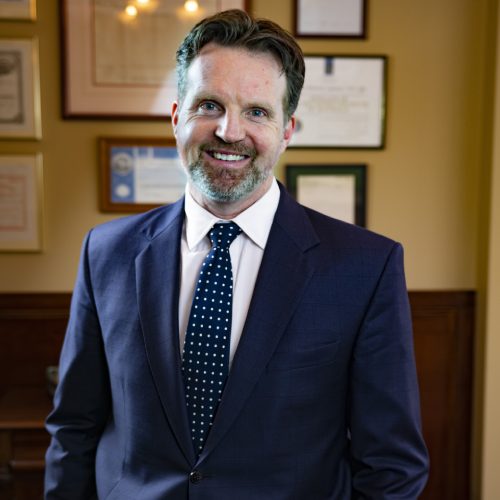
A stockbroker who could see the model was failing clients, advisers and the quality of advice itself
Charles began his career as a stockbroker in the late 1980s, in an era when the industry measured its success in transactions. He was good at it. But over a decade of sitting across the table from investors, the same pattern kept surfacing — and it had nothing to do with picking stocks.
His clients were successful people: business owners, professionals, families who had built real wealth. Yet managing their own portfolios had quietly become a second job. Corporate actions, dividend elections, dividend cheques, franking credits, entitlement offers, tax records, rebalancing — the administration alone consumed weekends. And beneath the paperwork sat a harder problem: judging the merits of one business against another is specialist work, and most of them had neither the time nor the training to do it properly.
They were carrying risk they had not chosen and a workload they did not want. The industry's answer at the time was to sell them more product. Charles concluded the answer was to take the whole burden off them entirely — to make the investment decisions professionally, on a clearly stated philosophy, and to run the administration behind them so the client never had to think about it.
What emerged was not one isolated flaw, but a set of structural problems in how private client portfolios were advised, administered and reviewed. The issues fell into four broad areas: adviser efficiency, client administration, accountability and incentives.
Adviser efficiency
Ringing clients, waiting for calls to be returned and then chasing missed calls was highly inefficient. Clients were working, travelling, attending to family matters or simply out — so opportunities could be missed because contact could not be made at the right time. The adviser's time was better spent doing the work clients had engaged them to do: researching businesses, assessing risk and making disciplined investment decisions.
Client efficiency
From the client's side the missed calls, returned calls and lost opportunities were just as obvious. A process that depended on timing a phone call correctly was never likely to serve busy investors well.
Administration
Clients were losing dividend cheques, missing corporate actions and overlooking key administrative tasks such as lodging tax file numbers. These were not small inconveniences; they cost clients time, money and peace of mind.
Accountability
When clients sat down with their adviser at the end of the year, the results were difficult to assess cleanly. Some recommendations had been accepted, others declined, and some opportunities missed because contact could not be made in time. That made it harder to judge whether outcomes reflected the advice, the process, or the client's availability.
Incentives
When an adviser is paid by commission, the incentive is obvious. The adviser needs turnover; the client wants the best long-term returns. Those two objectives were not always compatible.
In 2003, Charles left to build that firm himself. Leyland Private Asset Management is a privately owned business with no institutional parent, no in-house product shelf and no sales targets — so the only interest it serves is the client's.
To solve these problems, Charles created a firm in which adviser and client sit on the same side of the table. Incentives are aligned, portfolio management is more efficient, and performance can be assessed with true accountability. The objective remains simple: to grow the client's wealth in a disciplined manner.
Three commitments, unchanged since 2003
Charles's vision produced a model built on transparency, trust and relationships measured in decades rather than transactions. Those are not values the firm adopted later — they are the reason it exists.
Transparency without being asked
Clients hold their investments directly and can see exactly what they own, what it cost and what we are paid.
Trust earned by carrying the load
The original promise still stands: the investment decisions and the entire administrative process sit with us. Corporate actions, reporting, records and reconciliations are handled in-house so the client's involvement is a conversation, not a task list.
Relationships measured in decades
A deliberately limited client base, a named adviser who stays, and a portfolio built for one family's circumstances. Many of the clients who joined in the firm's earliest years are still with us — and so are their children.
Market cycles have come and gone. The commitment has not.
Since 2003 the firm has managed client capital through the aftermath of the dot-com collapse, the Global Financial Crisis, the COVID-19 shock and the inflation and interest rate cycle that followed. Each brought a different kind of fear, and each rewarded the same discipline.
Our philosophy has never depended on predicting those events. It depends on owning quality businesses bought with a margin of safety, on protecting the downside before pursuing the upside, and on having the patience to do nothing when nothing is worth doing. That is what has allowed us to keep the promise made to our first clients through every one of them.
How we choose investments →The dot-com unwind
The firm was founded in the wreckage of a market that had abandoned valuation entirely — a formative lesson in why price paid matters, and why a business must be judged on what it earns.
The Global Financial Crisis
Balance sheet quality stopped being an academic preference and became the difference between recovery and permanent loss. Direct ownership meant clients could see precisely what they held throughout.
The COVID-19 shock
The fastest bear market on record, then one of the fastest recoveries. Clients heard from their adviser directly and often — the value of a small firm with senior people answering the phone.
Inflation and the rate cycle
Capital became expensive again and speculative assets repriced. Businesses with real earnings and pricing power did what they were bought to do.
A firm designed to outlast any one person
Continuity matters at Leyland. Charles remains Managing Director and an active portfolio manager, working alongside a dedicated team of directors and senior portfolio managers who bring decades of combined market experience.
Our firm's stability rests on the long tenure of our advisory team. That is deliberate: it means the person responsible for your portfolio offers proven, long-term perspective and a deep, enduring commitment to your financial outcomes.
Charles Leyland — founder, Managing Director and portfolio manager since 2003.
Directors and senior portfolio managers who manage client portfolios themselves.
Senior specialists with tenure measured in decades, several with the firm since its earliest years.
About the firm
The questions prospective clients most often ask about the firm.
All FAQs →Who owns the firm?
Leyland is privately owned by its founder and Managing Director, Charles Leyland. There is no institutional parent, no in-house product shelf and no external shareholder whose returns compete with yours.
How has the firm performed through market downturns?
We have managed client portfolios through the dot-com unwind, the Global Financial Crisis, the COVID-19 shock and the inflation cycle that followed. Our philosophy places capital preservation ahead of capital growth: we assess what can go wrong before we consider what might go right.
Has the investment philosophy changed since 2003?
No. The firm was founded on the fundamental tenets of value investing — owning quality businesses at sensible valuations with a margin of safety — and has applied them without exception through every cycle since.
Twenty-three years on, the offer is unchanged.
Start with an obligation-free conversation with a senior adviser.