

The ASX has declined around 1.5% over the past month, underperforming the US market, which gained approximately 5%. The key influences on the Australian market were interest rates and the Federal Budget, particularly the potential impact on asset prices.
Financial stocks represent a significant portion of the ASX and have faced pressure from higher mortgage costs, alongside concerns around potential changes to capital gains tax (CGT) and negative gearing policies.
The Reserve Bank of Australia increased interest rates by 0.25% to 4.35% during the month in response to persistent inflationary pressures. Inflation accelerated to 4.6% in March before easing back to 4.2%. At the same time, unemployment has begun to rise, which may provide the RBA with flexibility to pause further tightening.
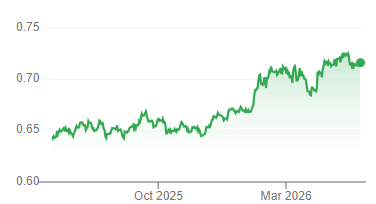
Globally, interest rates have remained relatively stable, contributing to an appreciation in the Australian dollar and reducing the relative attractiveness of Australian assets to offshore investors.
AUD / USD – 1 Year
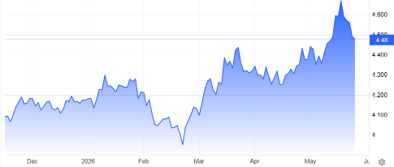
However, global inflation pressures have also started to re-emerge, leading markets to significantly reduce expectations of US rate cuts, with some investors now considering the possibility of further tightening. This shift has been more evident in bond markets than equities, particularly through higher US Treasury yields.
US 10 Year Treasury Note Yield – 6 Month
Alex Leyland