

The new financial year has begun much as the previous one ended. Geopolitical tensions in the Middle East continue to dominate investor sentiment, primarily through their impact on energy markets. Oil prices have moved higher again in recent weeks as markets assess the potential for supply disruptions and the broader implications for global inflation.
Crude Oil WTI (USD/Bbl)
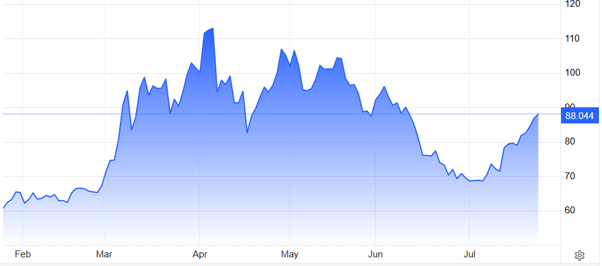
Energy remains a key input cost across the global economy, influencing everything from manufacturing and transport to food production. Consequently, higher oil prices increase the risk that inflation remains above central bank targets, delaying the pace of monetary easing.
While Australia has maintained relatively high interest rates, many major economies continue to operate with lower policy rates. This has supported the Australian dollar and has been one factor behind the relative underperformance of the Australian share market over the past year.
- Reserve Bank of Australia cash rate – 35%
- U.S. Federal Reserve cash rate – 3.50%
In the United States, recent inflation data has reduced expectations of interest rate cuts. Markets are now increasingly pricing in an extended period of unchanged rates, with some commentators even suggesting the next move could be higher should inflation prove more persistent.
Meanwhile, mega-cap technology companies continue to drive global equity market performance. Investor enthusiasm for artificial intelligence remains strong; however, attention is increasingly shifting from the promise of AI to its commercial execution. Markets are looking for evidence that the substantial capital being invested in AI infrastructure will translate into sustainable revenue growth, improved productivity and higher corporate earnings.
The US reporting season is currently underway, with particular focus on the largest technology companies. Alphabet, (parent company of Google) was the first of the mega-cap tech stocks to report. Scepticism over the company’s seemingly endless AI capex spend saw the shares sell-off following the result. Investors want greater evidence of a return on investment for this spend. Clearly, the +80% revenue growth in Cloud Services (much of it tied to AI revenues) was not enough to satisfy investors. We think investors will continue closely analysing both quarterly earnings and management commentary on AI-related capital expenditure, profitability and future investment plans across mega-cap technology stocks.
Looking ahead, the Australian reporting season commences in August. While investors will assess the reported FY26 results, the greater emphasis is expected to be on management outlook statements and earnings guidance for FY27. Given current market valuations, company guidance is likely to have a greater influence on share prices than historical earnings.
Key themes we will be monitoring include:
- Reported earnings and the extent to which companies meet or exceed market expectations.
- Management guidance and outlook for FY27.
- Margin pressures arising from wage growth, energy prices and other operating costs.
- Evidence of productivity improvements and cost savings from artificial intelligence initiatives.
- Capital management initiatives, including dividends, share buybacks and special distributions.
- Consumer demand, pricing power and the ability of businesses to maintain margins in a higher-cost environment.
Alex Leyland